
Last updated: September 2026


Warranty Service
Our service is warranted

587-792-1456
7131 6 St SE Unit H
Calgary, AB T2H 2M8

Schedule an Appointment
Get your home tested for Radon.
Is your family safe from it?
Here are the most common questions you should ask yourself regarding Radon’s impact to you and your family’s health.
-
What do I need to know about Radon?
-
Why do I need radon mitigation? Does it work?
-
Am I sure my home is free of radon gas?
-
Should I get afraid of getting chronic diseases?
-
What are the effects of radon poisoning?
-
Do you know the effects of long-term exposure to radon?
-
How do I know if I need to get a radon mitigation system?
-
Why do we have radon at home?
-
Do I want you home and my family to be protected from radon?
-
Are you aware of the benefits of radon mitigation system?
Have a question?
let us know how we can help with all your home maintenance, Service & repair needs
What is Radon?

Radon comes from the radioactive decay of uranium and radium and exists naturally in rocks live granite.

Like carbon monoxide, it is tasteless, colorless and odorless.

Radon breaks down into radioactive particles which are inhaled and become trapped in the lungs.

Radon is 2nd leading cause of lung cancer.
__CONFIG_colors_palette__{“active_palette”:0,”config”:{“colors”:{“62516”:{“name”:”Main Accent”,”parent”:-1}},”gradients”:[]},”palettes”:[{“name”:”Default Palette”,”value”:{“colors”:{“62516”:{“val”:”rgb(19, 114, 211)”,”hsl”:{“h”:210,”s”:0.83,”l”:0.45}}},”gradients”:[]}}]}__CONFIG_colors_palette__Learn More__CONFIG_colors_palette__{“active_palette”:0,”config”:{“colors”:{“4b31d”:{“name”:”Main Accent”,”parent”:-1},”5fb35″:{“name”:”Accent Dark”,”parent”:”4b31d”,”lock”:{“saturation”:1}}},”gradients”:[]},”palettes”:[{“name”:”Default”,”value”:{“colors”:{“4b31d”:{“val”:”rgb(51, 190, 127)”,”hsl”:{“h”:152,”s”:0.57,”l”:0.47,”a”:1}},”5fb35″:{“val”:”rgb(59, 65, 63)”,”hsl_parent_dependency”:{“h”:160,”s”:0.04,”l”:0.24,”a”:1}}},”gradients”:[]},”original”:{“colors”:{“4b31d”:{“val”:”rgb(51, 190, 127)”,”hsl”:{“h”:152,”s”:0.57,”l”:0.47,”a”:1}},”5fb35″:{“val”:”rgb(59, 65, 63)”,”hsl_parent_dependency”:{“h”:160,”s”:0.04,”l”:0.24,”a”:1}}},”gradients”:[]}}]}__CONFIG_colors_palette__
table of contents Get your home tested for Radon.1. Improving Air Quality2. Health is wealth3. Long term investment4. Reduces moisture5. Safety
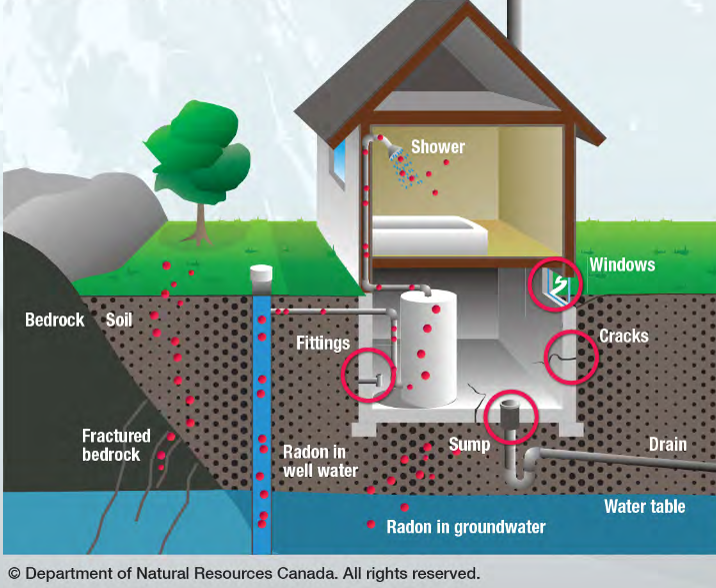
How does Radon enter our homes?
Radon migrates to the surface through cracks in the bedrock and into soil cover and the water table. It enters your home through gaps in the foundation, drains, sump pumps, joints and loosely fitted pipes, etc.
Why is Radon dangerous?
Radon is radioactive. Outdoors there is little danger because radon is diluted in the open air. But indoors, radon can be trapped and become concentrated in enclosed or poorly ventilated spaces resulting in a significant increased health risk, especially lung cancer.
How does radon enter our lungs?
When we breathe in radon gas, particles settle in our lung tissue and begin to decay. As the radon particles decay, they release bursts of energy that damage the lung tissue cells. Over time the cell damage can lead to the development of lung cancer.
Who said radon can lead to cancer?
The Environmental Protection Agency and US Surgeon General have said for the last decade that radon is the second leading cause of lung cancer. This has since been confirmed by the National Academy of Science in their report Biological Effects of Ionizing Radiation (BEIR).

Description
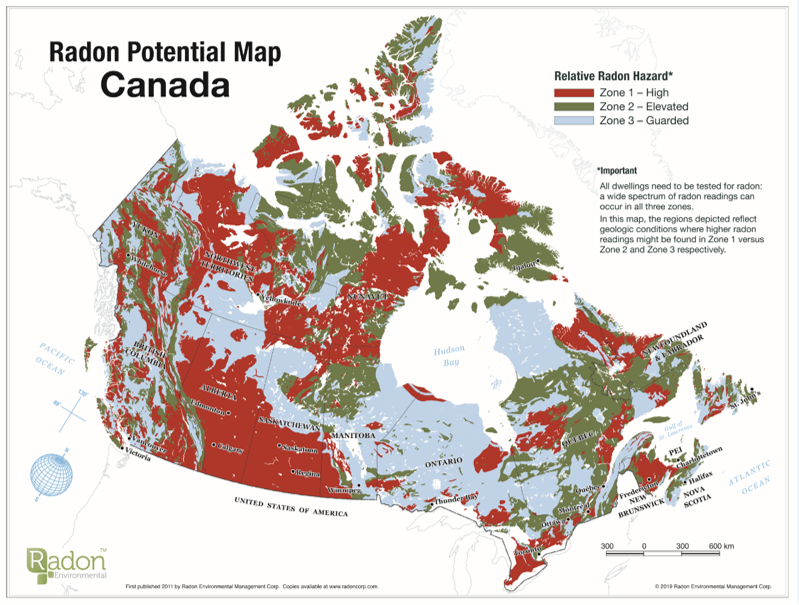
The percentage of homes with high radon levels in Calgary Health Region is 11.9%. In Canada, radon is the second highest cause of lung cancer, after smoking. November is Radon Action Month – there is no better time to start testing your home and ensuring that the air you breathe is safe for you and your family.
This map was created using data collected from the Cross-Canada Radon Survey (2011) and the Radon Thoron Survey in Canadian Metropolitan Areas (2013). Collected information is grouped by Health Region. Boundary files are sourced from Statistics Canada, 2018. Map produced by Radiation Protection Bureau, Health Canada, 2019. *A high radon level is defined as a radon level that is greater than the Health Canada guidelines for indoor radon, 200 Bq/m3.
What can you do?
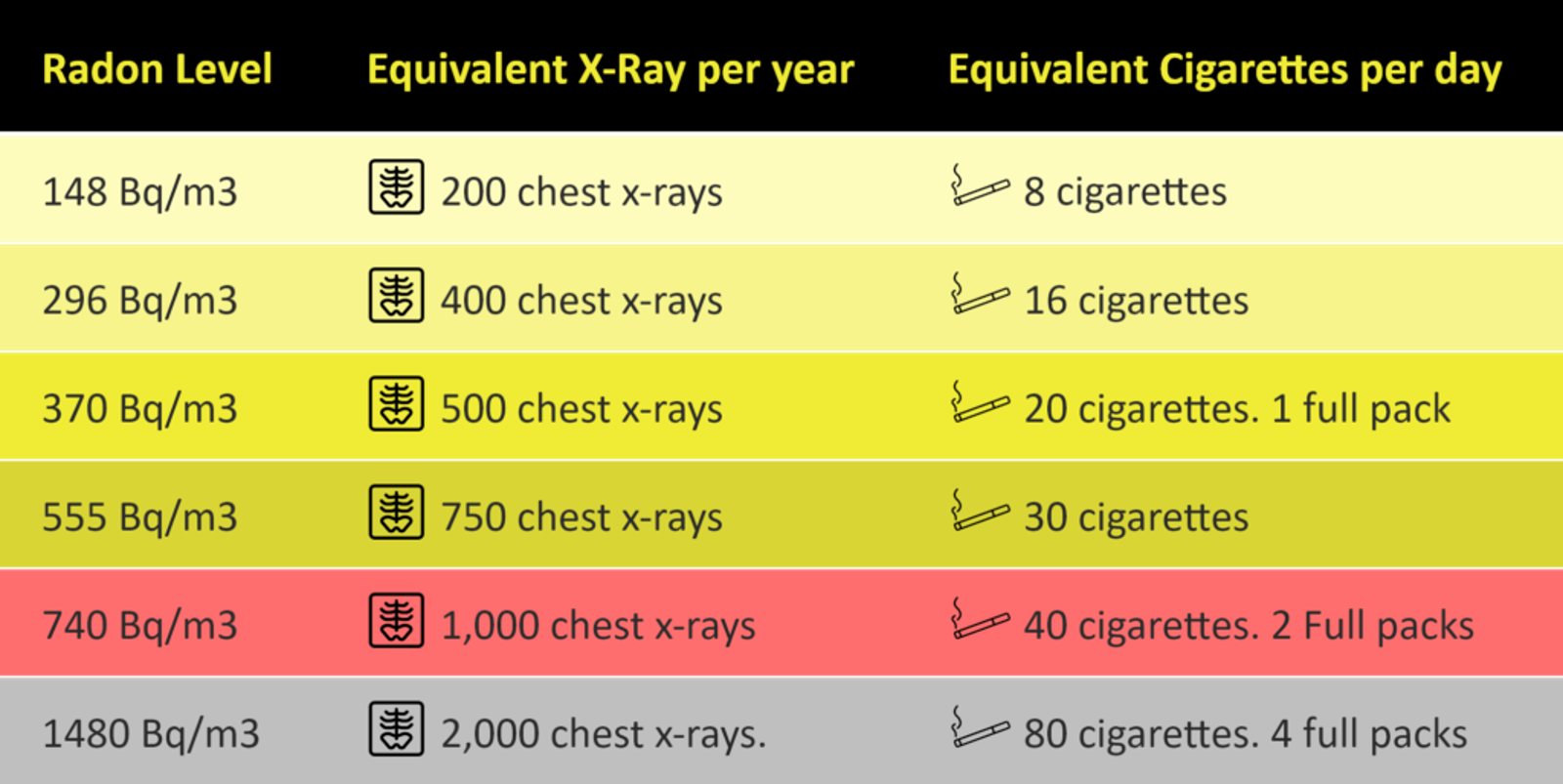
Since you cannot taste, smell or see radon gas, radon detection technology has been developed to test and monitor radon levels in the home and workplace. Testing maybe short-term or long-term. Once the level of radon has been identified, you have to mitigate radon to control and avoid too much exposure.
Test Radon
Long term Radon Detectors
These detectors use a small piece of special plastic enclosed in a container. The detector is exposed to the air in a home for a recommended time of 90 days. At the end of the test the detector is returned to a laboratory for analysis, and the average radon concentration is calculated.
Short term Radon Detectors
When you need a fast measurement of the radon concentration – for example, to check how a mitigation system is working – a short-term measurement of two to seven days is acceptable. However, short-term measurements should never be used to determine if the radon concentration in a home exceeds the Canadian Guideline or to assess the need for remedial actions.
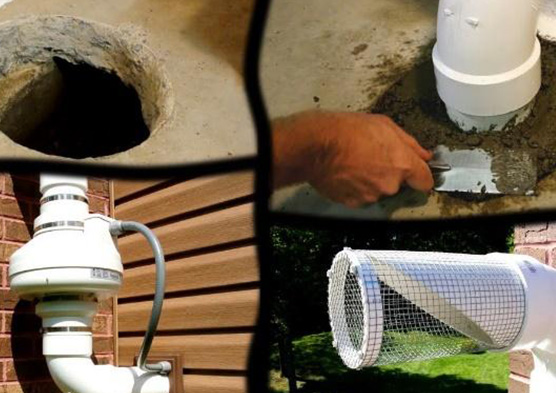
Mitigate Radon
The effectiveness of any one radon-reduction method will depend upon the unique characteristics of your home, the level of radon, how it is getting into your house, and how thoroughly the job is done. A single method may do the job, but sometimes a combination of several methods must be used.
- Active Sub-Slab Depressurization
- Sump-Hole Depressurization
- Drainage System Depressurization
- Homes with Crawlspaces: Active Sub-Membrane Depressurization
__CONFIG_colors_palette__{“active_palette”:0,”config”:{“colors”:{“62516”:{“name”:”Main Accent”,”parent”:-1}},”gradients”:[]},”palettes”:[{“name”:”Default Palette”,”value”:{“colors”:{“62516”:{“val”:”rgb(19, 114, 211)”,”hsl”:{“h”:210,”s”:0.83,”l”:0.45}}},”gradients”:[]}}]}__CONFIG_colors_palette__Request A Quote
Benefits of Radon Mitigation
1. Improving Air Quality
Instead of radon circulating the house, by the use of radon mitigation system, it can extract radon from inside to outside. It eliminates radon air inside your house.
Therefore, it eliminates bad air inside the home by the use of extraction fan from the mitigation system, you inhale fresh air inside your house.

2. Health is wealth
Are you aware of the effects of radon to your body? Hospitalization cost is expensive. The emotional and physical pain brought by the exposure colourless and odourless gas is priceless.
You can protect yourself and your family from getting sick by radon mitigation system

3. Long term investment
Radon mitigation may be expensive. On the other hand, being hospitalized is surely more expensive, right?
The fact that you cannot work and it also affects your physical and emotional being as a person.
Installing radon mitigation at home always outweighs the benefits than the cost. As a home owner you invest to protect the future of your family.
Radon mitigation system is an investment to secure the future of your family where in the health benefit is priceless.

4. Reduces moisture
Radon mitigation system helps to reduce the moisture content in the air before it enters the home. It can also filter air from the soil beneath your home.
Lower humidity is a plus factor in health benefits as it converts into a fresh air and removes the unpleasant odour. This will make your family healthy and safe.
Always remember lower humidity means lesser growth for bacteria, dust, allergies and many more that can contribute to lung diseases.
5. Safety
Are you worried about the hazards of exposure to radon inside your house? Do you want to see your grandchildren as you grow old? What do you think is your life expectancy?
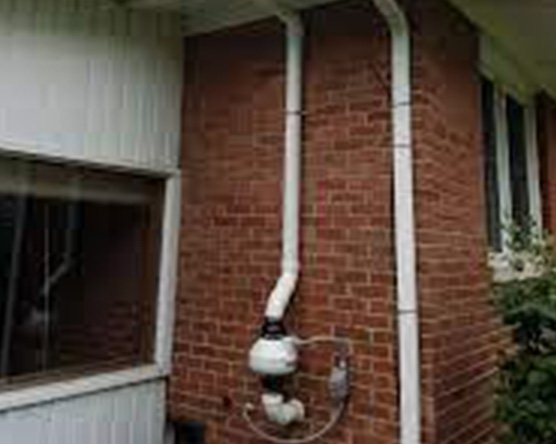
Radon mitigation system should be installed by a Licensed radon mitigation professional. This is for your good and safety.
Installed radon mitigation system helps reduce Radon level in your home.
Visit these sites for additional information
What is radon and where can I find it?
Radon is an invisible radioactive gas that causes lung cancer. In Canada, it is the second highest cause of lung cancer, after smoking. It comes from the ground and is produced by the breakdown of the mineral uranium that occurs naturally in the soil. As uranium breaks down, it eventually releases radon. Radon is a gas, so it travels easily through the soil, working its way toward the surface.
__CONFIG_colors_palette__{“active_palette”:0,”config”:{“colors”:{“62516”:{“name”:”Main Accent”,”parent”:-1}},”gradients”:[]},”palettes”:[{“name”:”Default Palette”,”value”:{“colors”:{“62516”:{“val”:”rgb(19, 114, 211)”,”hsl”:{“h”:210,”s”:0.83,”l”:0.45}}},”gradients”:[]}}]}__CONFIG_colors_palette__ LEARN MORE
On World Cancer Day The Canadian Lung Association Launches “My Radon Story” Campaign; Urges Families to Test for Radon
High radon levels can be reduced in a safe and effective way. It is recommended to work with a radon mitigation professional certified by the Canadian- National Radon Proficiency Program.
__CONFIG_colors_palette__{“active_palette”:0,”config”:{“colors”:{“62516”:{“name”:”Main Accent”,”parent”:-1}},”gradients”:[]},”palettes”:[{“name”:”Default Palette”,”value”:{“colors”:{“62516”:{“val”:”rgb(19, 114, 211)”,”hsl”:{“h”:210,”s”:0.83,”l”:0.45}}},”gradients”:[]}}]}__CONFIG_colors_palette__ LEARN MORE
Videos of Radon Mitigation System
Radon: Is it in your home?
Mike Holmes talks about radon
Radon: What is it? How to Get Rid of It
__CONFIG_colors_palette__{“active_palette”:0,”config”:{“colors”:{“62516”:{“name”:”Main Accent”,”parent”:-1}},”gradients”:[]},”palettes”:[{“name”:”Default Palette”,”value”:{“colors”:{“62516”:{“val”:”rgb(19, 114, 211)”,”hsl”:{“h”:210,”s”:0.83,”l”:0.45}}},”gradients”:[]}}]}__CONFIG_colors_palette__Request A Quote__CONFIG_colors_palette__{“active_palette”:0,”config”:{“colors”:{“62516”:{“name”:”Main Accent”,”parent”:-1}},”gradients”:[]},”palettes”:[{“name”:”Default Palette”,”value”:{“colors”:{“62516”:{“val”:”rgb(19, 114, 211)”,”hsl”:{“h”:210,”s”:0.83,”l”:0.45}}},”gradients”:[]}}]}__CONFIG_colors_palette__Call For Service
See What Our Customers Have To Say…


“Terrence and James arrived promptly to replace our very old furnace. They were very knowledgeable about the product and installation process. They worked diligently and professionally and answered all of the questions we had. They left the furnace room as clean as they found. We highly recommend them. Thank you to both of you“
Jan Peterson

“I normally would hesitate to write a review but I thought I should for this company. Carla and her team are great to work with. I had a split ac installed on my apartment unit and no other company are willing to do the approval process and provide the detailed pricing and the exact specs. The service delivered is prompt and professional, with no hidden cost. I am glad that I’ve chosen Alberta Indoor Comfort. Thank you!”
May Ngu

“Alberta indoor Comfort replaced my old furnace several years ago. They were fast and efficient with a one day install. I decided to order my A/C from them because of their good services and products. Their quote was exactly what I paid. They were on time to install the unit. No mess left behind. I am very happy with their products and service. I will continue to use their services in the future. Very happy with their service and products. They always follow up on any work or installs they do.”
Bev De Paoli
Proudly Serving Greater Calgary, AB

- Calgary
- Cochrane
- Bragg Creek
- Crossfield
- Airdrie
- Chestermere
- Strathmore
- Langdon
- Carseland
- De Winton
- Okotoks
- High River
- Millarville
 __CONFIG_colors_palette__{“active_palette”:0,”config”:{“colors”:{“f3080”:{“name”:”Main Accent”,”parent”:-1},”f2bba”:{“name”:”Main Light 10″,”parent”:”f3080″},”trewq”:{“name”:”Main Light 30″,”parent”:”f3080″},”poiuy”:{“name”:”Main Light 80″,”parent”:”f3080″},”f83d7″:{“name”:”Main Light 80″,”parent”:”f3080″},”frty6″:{“name”:”Main Light 45″,”parent”:”f3080″},”flktr”:{“name”:”Main Light 80″,”parent”:”f3080″}},”gradients”:[]},”palettes”:[{“name”:”Default”,”value”:{“colors”:{“f3080”:{“val”:”rgb(23, 23, 22)”},”f2bba”:{“val”:”rgba(23, 23, 22, 0.5)”,”hsl_parent_dependency”:{“h”:60,”l”:0.09,”s”:0.02}},”trewq”:{“val”:”rgba(23, 23, 22, 0.7)”,”hsl_parent_dependency”:{“h”:60,”l”:0.09,”s”:0.02}},”poiuy”:{“val”:”rgba(23, 23, 22, 0.35)”,”hsl_parent_dependency”:{“h”:60,”l”:0.09,”s”:0.02}},”f83d7″:{“val”:”rgba(23, 23, 22, 0.4)”,”hsl_parent_dependency”:{“h”:60,”l”:0.09,”s”:0.02}},”frty6″:{“val”:”rgba(23, 23, 22, 0.2)”,”hsl_parent_dependency”:{“h”:60,”l”:0.09,”s”:0.02}},”flktr”:{“val”:”rgba(23, 23, 22, 0.8)”,”hsl_parent_dependency”:{“h”:60,”l”:0.09,”s”:0.02}}},”gradients”:[]},”original”:{“colors”:{“f3080”:{“val”:”rgb(23, 23, 22)”,”hsl”:{“h”:60,”s”:0.02,”l”:0.09}},”f2bba”:{“val”:”rgba(23, 23, 22, 0.5)”,”hsl_parent_dependency”:{“h”:60,”s”:0.02,”l”:0.09,”a”:0.5}},”trewq”:{“val”:”rgba(23, 23, 22, 0.7)”,”hsl_parent_dependency”:{“h”:60,”s”:0.02,”l”:0.09,”a”:0.7}},”poiuy”:{“val”:”rgba(23, 23, 22, 0.35)”,”hsl_parent_dependency”:{“h”:60,”s”:0.02,”l”:0.09,”a”:0.35}},”f83d7″:{“val”:”rgba(23, 23, 22, 0.4)”,”hsl_parent_dependency”:{“h”:60,”s”:0.02,”l”:0.09,”a”:0.4}},”frty6″:{“val”:”rgba(23, 23, 22, 0.2)”,”hsl_parent_dependency”:{“h”:60,”s”:0.02,”l”:0.09,”a”:0.2}},”flktr”:{“val”:”rgba(23, 23, 22, 0.8)”,”hsl_parent_dependency”:{“h”:60,”s”:0.02,”l”:0.09,”a”:0.8}}},”gradients”:[]}}]}__CONFIG_colors_palette__
2021 Alberta Indoor Comfort. – All Rights Reserved