
Last updated: September 2026


Warranty Service
Our service is warranted

587-792-1456
7131 6 St SE Unit H
Calgary, AB T2H 2M8

Schedule an Appointment
How do you control your
indoor air quality?
Top 5 Benefits of having an HRV in your home.
Have a question?
let us know how we can help with all your home maintenance, Service & repair needs

Your home’s indoor quality (IAQ) could be 2-5 times worse than the outdoor air. Newer homes are at a high risk since tighter homes leak less to outside thus trapping air inside – thus the need of a better ventilation system.
Symptoms of poor air:
- Sore or irritated eyes
- Feeling of suffocation
- Dry sore throat, coughing
- Fatigue, Headaches
- Agitation, Anxiety
- Dizziness, Sleeplessness
- Psoriasis, Palpitation
- Nausea, Numbness
- Cold sensitivity
- Backaches
With the Covid-19 Pandemic happening all over the world, our houses keep us somehow feel safer by staying indoors and keeping up to date on the news, little do we know that deadly stuff are just lurking around every corner of our house! Yes! Dust and bacteria are some of the reasons why we develop lung and skin illnesses, and oh boy! the damage caused by intense heat and humidity may expose us to having heat stroke! But don’t fret! because there is hope.
ERV or HRV – Which to choose?
The best choice between an ERV and an HRV is dependent on the climate and specific needs.
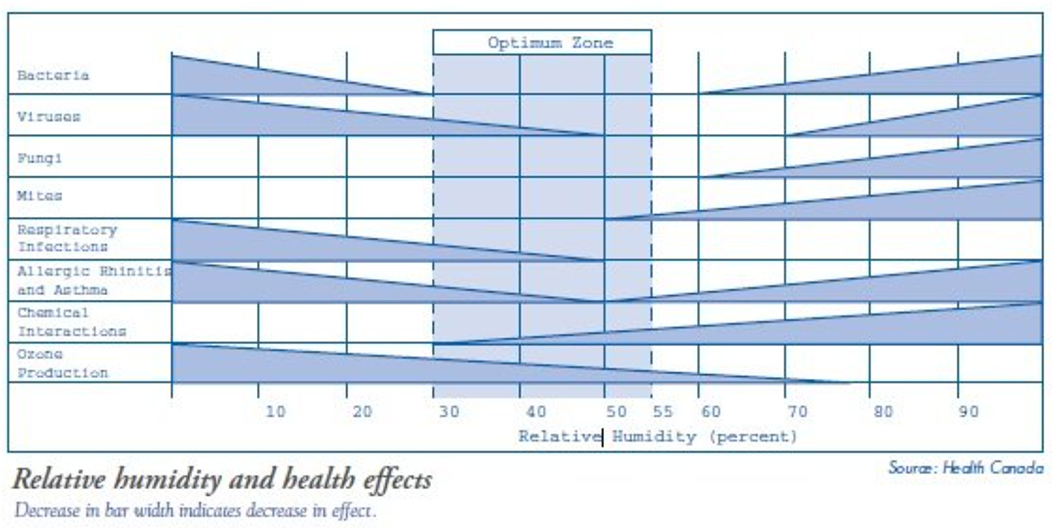
- If your house is too humid in winter (above 60% RH) then an HRV is the better choice, as it would surely get rid of excess humidity while an ERV would tend to keep it at a high level.
- If your house is too dry in winter, then an ERV would be a better choice as it helps retain humidity, eliminating the need (and cost) for you to generate it through other means.
In summer, the use of an HRV will normally increase the level of humidity inside your home, so an ERV is greater in hot and humid zones. But a dedicated dehumidifier will highly likely do the trick there. At the very least, the ERV will lower the load on the air conditioning system, even if it can’t keep up with the high humidity level on the outside.
Therefore, there is not one right choice between ERV & HRV systems. It totally depends on the climate, lifestyle and the home itself.
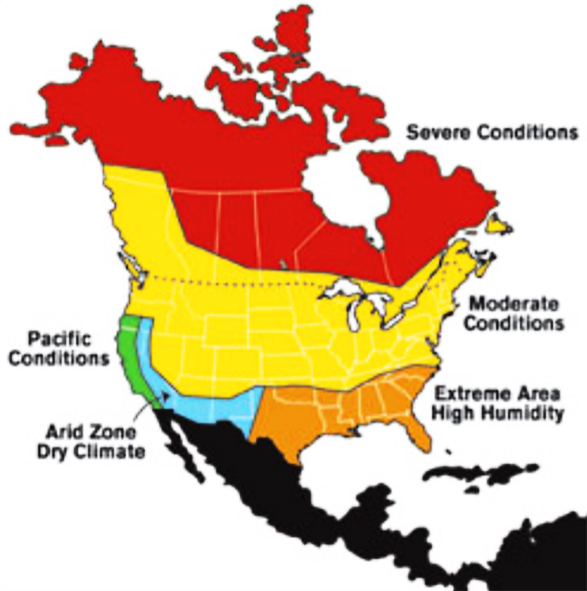
Severe Condition
HRV required
Pacific Conditions
HRV recommended, ERV Optional
Extreme Area** – High Humidity
ERV recommended*
Moderate Conditions
HRV recommended
Arid Zone – Dry Climate
HRV recommended
Benefits of having an HRV at home
It cleans the air you breathe.
A healthy home requires clean air, which is difficult nowadays due to pollution.
Introducing the Heat Recovery Ventilation system. When installed at home, it uses the temperature of the stale exhaust or the outgoing air to pre-heat and condition the incoming air at your home. HRV also helps maintain and reduce pollutants such us dust to enter to your home.

Energy Efficient.
Do you want know what’s the best part?
Having an HRV system at your home is very cost efficient! You can SAVE hundreds of dollars to your electricity bill, because instead of you using turning on the air conditioner at your room or blowing the air on your electric fans you will now have an – all-in-one system that will do the job for you! Lesser usage of appliances means MORE savings on your utility bills and you also contribute to lesser carbon use on the planet and provide a safer and healthier home for your family!

Avoids condensation.
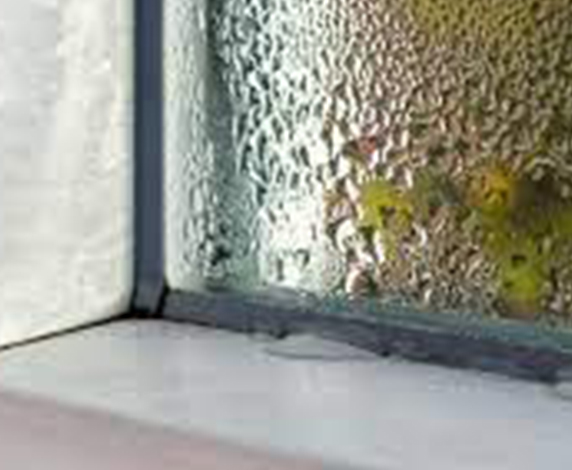
Condensation is one of the most prevalent problems that homeowners have, and it is also the most common source of moisture in homes. The HRV system will eliminate all of the water vapor created, resulting in no moisture condensation and the prevention of dampness, rot and mold growth.
Convenient in terms of size.
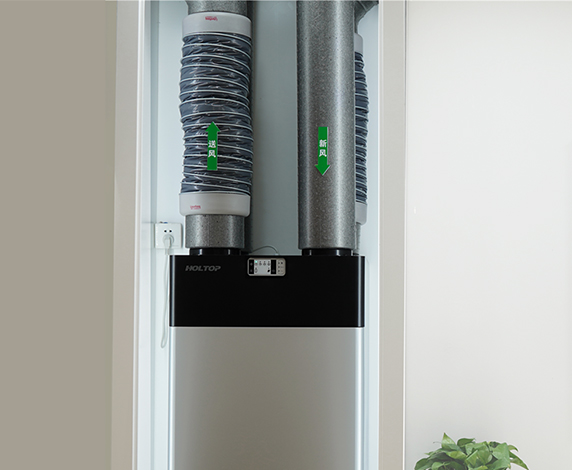
The heat recovery ventilation system is small enough to fit your basement, attic, or adjoining garage. Some types can be installed in a hot-press in the kitchen. The primary control unit is typically installed in the utility room or kitchen, but it can be installed anywhere in the house to meet your needs.
 __CONFIG_colors_palette__{“active_palette”:0,”config”:{“colors”:{“62516”:{“name”:”Main Accent”,”parent”:-1}},”gradients”:[]},”palettes”:[{“name”:”Default Palette”,”value”:{“colors”:{“62516”:{“val”:”rgb(19, 114, 211)”,”hsl”:{“h”:210,”s”:0.83,”l”:0.45}}},”gradients”:[]}}]}__CONFIG_colors_palette__Request A Quote__CONFIG_colors_palette__{“active_palette”:0,”config”:{“colors”:{“62516”:{“name”:”Main Accent”,”parent”:-1}},”gradients”:[]},”palettes”:[{“name”:”Default Palette”,”value”:{“colors”:{“62516”:{“val”:”rgb(19, 114, 211)”,”hsl”:{“h”:210,”s”:0.83,”l”:0.45}}},”gradients”:[]}}]}__CONFIG_colors_palette__Call Now! 587-792-1456__CONFIG_colors_palette__{“active_palette”:0,”config”:{“colors”:{“f3080”:{“name”:”Main Accent”,”parent”:-1},”f2bba”:{“name”:”Main Light 10″,”parent”:”f3080″},”trewq”:{“name”:”Main Light 30″,”parent”:”f3080″},”poiuy”:{“name”:”Main Light 80″,”parent”:”f3080″},”f83d7″:{“name”:”Main Light 80″,”parent”:”f3080″},”frty6″:{“name”:”Main Light 45″,”parent”:”f3080″},”flktr”:{“name”:”Main Light 80″,”parent”:”f3080″}},”gradients”:[]},”palettes”:[{“name”:”Default”,”value”:{“colors”:{“f3080”:{“val”:”rgb(23, 23, 22)”},”f2bba”:{“val”:”rgba(23, 23, 22, 0.5)”,”hsl_parent_dependency”:{“h”:60,”l”:0.09,”s”:0.02}},”trewq”:{“val”:”rgba(23, 23, 22, 0.7)”,”hsl_parent_dependency”:{“h”:60,”l”:0.09,”s”:0.02}},”poiuy”:{“val”:”rgba(23, 23, 22, 0.35)”,”hsl_parent_dependency”:{“h”:60,”l”:0.09,”s”:0.02}},”f83d7″:{“val”:”rgba(23, 23, 22, 0.4)”,”hsl_parent_dependency”:{“h”:60,”l”:0.09,”s”:0.02}},”frty6″:{“val”:”rgba(23, 23, 22, 0.2)”,”hsl_parent_dependency”:{“h”:60,”l”:0.09,”s”:0.02}},”flktr”:{“val”:”rgba(23, 23, 22, 0.8)”,”hsl_parent_dependency”:{“h”:60,”l”:0.09,”s”:0.02}}},”gradients”:[]},”original”:{“colors”:{“f3080”:{“val”:”rgb(23, 23, 22)”,”hsl”:{“h”:60,”s”:0.02,”l”:0.09}},”f2bba”:{“val”:”rgba(23, 23, 22, 0.5)”,”hsl_parent_dependency”:{“h”:60,”s”:0.02,”l”:0.09,”a”:0.5}},”trewq”:{“val”:”rgba(23, 23, 22, 0.7)”,”hsl_parent_dependency”:{“h”:60,”s”:0.02,”l”:0.09,”a”:0.7}},”poiuy”:{“val”:”rgba(23, 23, 22, 0.35)”,”hsl_parent_dependency”:{“h”:60,”s”:0.02,”l”:0.09,”a”:0.35}},”f83d7″:{“val”:”rgba(23, 23, 22, 0.4)”,”hsl_parent_dependency”:{“h”:60,”s”:0.02,”l”:0.09,”a”:0.4}},”frty6″:{“val”:”rgba(23, 23, 22, 0.2)”,”hsl_parent_dependency”:{“h”:60,”s”:0.02,”l”:0.09,”a”:0.2}},”flktr”:{“val”:”rgba(23, 23, 22, 0.8)”,”hsl_parent_dependency”:{“h”:60,”s”:0.02,”l”:0.09,”a”:0.8}}},”gradients”:[]}}]}__CONFIG_colors_palette__
2021 Alberta Indoor Comfort. – All Rights Reserved